Scaling Self-Hosted Cloud Applications: From 1K to 100K+ Users
DevOpsInfrastructure
DevOpsscalingKubernetesNextcloudOpenDeskinfrastructure
Table of Contents
- Introduction — Overview of scaling challenges
- Tier 1: 1,000 Users — Single server optimization
- Tier 2: 10,000 Users — Load balancing setup
- Tier 3: 50,000 Users — Kubernetes clustering
- Tier 4: 100,000+ Users — Enterprise architecture
- OpenDesk vs Vanilla Nextcloud — Platform comparison
- Scaling Decision Matrix — Decision framework
- Quick Reference — Configuration templates
- Conclusion — Key takeaways
Introduction
Self-hosting cloud applications gives you control over data sovereignty—but that control comes with scaling responsibility. Unlike SaaS platforms that abstract infrastructure away, self-hosted solutions like Nextcloud, OpenDesk, or Matrix require deliberate architecture decisions as user counts grow.
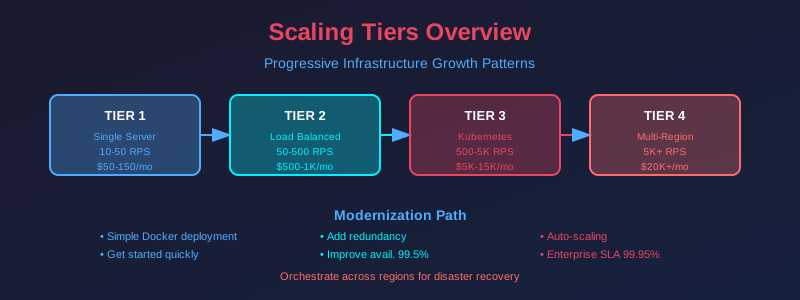
This guide maps four scaling tiers, using Nextcloud and OpenDesk as practical case studies:
| Tier | Users | Architecture |
|---|---|---|
| Tier 1 | 1,000 | Single server, optimized |
| Tier 2 | 10,000 | Multi-service, load balanced |
| Tier 3 | 50,000 | Clustered, distributed |
| Tier 4 | 100,000+ | Multi-region, enterprise |
Tier 1: 1,000 Users — Single Server, Optimized
At 1,000 users with ~10-15% concurrent usage, a well-tuned single server suffices. The focus is on optimization, not distribution.
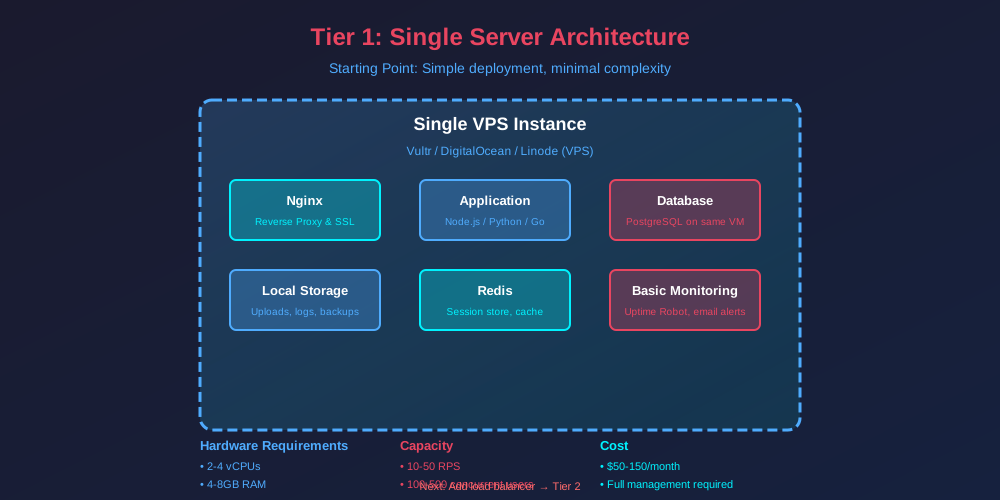
Hardware Baseline
Loading diagram...