Electric Guitar, Part 3: Recording and DIY Setup
🇩🇪 Auf Deutsch lesen~5 min read
MusicPracticeguitarelectric-guitarrecordingdiysetupintonationmusic
Comprehensive guide to jazz improvisation covering ii-V-I progressions, rhythm changes, modal jazz, transcription methodology, practice strategies, and essential listening across jazz history.
Essential music theory concepts for electronic music producers covering scales, chords, progressions, rhythm, basslines, and melodic writing — with practical applications for modern production.
Part 1 built the tone chain, part 2 mapped the fretboard. This part is about the two places where the instrument meets reality: the recording chain and the workbench. Both reward the same mindset — measure, adjust one variable, listen.
Recording electric guitar requires capturing the amplifier's tone or using direct injection (DI) with amp modeling.
Close micing (1-3 inches from speaker): Captures speaker tone, provides isolation. Common microphones: Shure SM57 (dynamic), Royer R-121 (ribbon). Position off-center for less harsh highs.
Room micing (3-6 feet away): Captures room reverb and ambience. Creates a more natural sound when blended with close mics. Use condenser microphones for higher sensitivity.
Combination: Blend close and room mics for "big" guitar sound. Adjust balance based on genre (clean jazz: more room; distorted metal: more close).
Cabinet IRs (Impulse Responses): Digital simulations of speaker cabinets and microphones. Load into amp sims or convolution reverb. Provides consistency and flexibility.
DI (Direct Injection): Guitar into interface without amplifier. Clean signal requires amp simulation or re-amping.
Re-amping: Record clean DI signal, then send to real amplifier. Allows infinite tone experimentation without re-recording.
Amp sims: Neural DSP, Kemper, Fractal amp emulations. Convenient, consistent, but some players prefer real amplifiers for dynamic response.
Intonation: Adjust bridge saddles so 12th-fret harmonic matches 12th-fret fretted note. Poor intonation ruins recordings.
Fresh strings: Old strings produce dull, dead tone. Change before critical recording sessions.
Noise reduction: Humbucking pickups reduce hum. Use noise gates for high-gain tones.
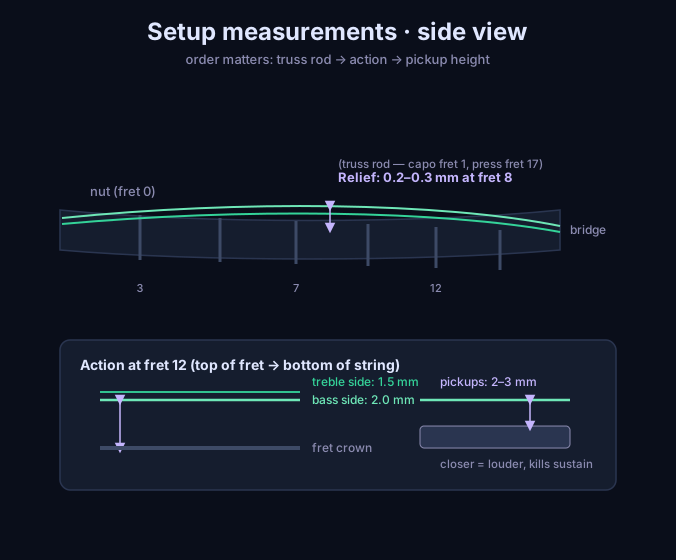 Setup measurements side view: neck relief, string action at the twelfth fret, and pickup height with typical values
Basic guitar maintenance is accessible to most players with simple tools. The order matters: relief first, then action, then pickup height — each step changes the next.
The truss rod counteracts string tension to maintain neck relief.
Process:
Uneven frets cause buzzing and dead spots. Fret leveling ensures consistent action.
Tools: Fret crowning file, leveling beam, masking tape, fret eraser, polishing compound.
Process:
Pickup height affects output and tone. Too close: magnetic pull interferes with string vibration; too far: weak output.
Process:
Adjust saddle position so 12th-fret harmonic matches 12th-fret fretted note.
Process:
Basic soldering for pickups, pots, switches requires soldering iron, solder, wire strippers, and multimeter.
Process:
Books:
Online:
YouTube: