Research
My research focuses on the intersection of artificial intelligence, extended reality (XR), and human-computer interaction. I investigate how immersive technologies can enhance human experiences and how AI can be integrated into virtual environments.
Current Research Areas 📚
AI in Virtual Reality
- GenAI Sales Agents in VR: Studying interference timing and user experience with AI-powered sales agents in virtual reality environments
- Intelligent Virtual Assistants: Developing context-aware AI systems for immersive spaces
- Multi-modal Interaction: Exploring natural language and gesture-based interfaces in XR
Extended Reality Development
- WebXR Technologies: Building browser-based VR/AR experiences using open standards
- Spatial Computing: Investigating 3D user interfaces and interaction design
- Performance Optimization: Improving rendering and interaction quality in web-based XR
Human-Computer Interaction
- Behavioral Graphs: Visualizing user behavior and interactions in virtual spaces
- Presence and Immersion: Understanding factors that contribute to compelling VR experiences
- Accessibility in XR: Making virtual reality experiences inclusive for all users
Publications
🕷 Overcoming Arachnophobia with Virtual Reality: A WebXR-Based Exposure Therapy Approach
Comprehensive scientific paper on browser-based Virtual Reality Exposure Therapy (VRET)
A rigorous academic examination of how WebXR technologies can democratize mental health interventions, covering theoretical foundations, clinical protocols, meta-analytic evidence, and technical implementation. Features 15 peer-reviewed references, statistical data from 34 RCTs, and detailed therapeutic guidelines.
Applied Quantization Strategies for Consumer LLM Deployment
An empirical evaluation of layer-aware quantization for deploying Qwen3.5 models on consumer hardware (12GB RTX 4080) and edge servers (128GB DGX Spark). Covers TQ3_0 3-bit KV cache compression, hybrid GPTQ-INT4+FP8 quantization, and context size optimization. Download PDF
KI-gestütztes Softwaretesten trainieren: Architektur und Pädagogik der Kognitiven Qualitätssicherung
A comprehensive guide on training Artificial Intelligence for software testing - from Prompt Engineering and RAG to Fine-Tuning with LoRA and autonomous test cycles. This research explores how to transform LLMs from generic text generators into specialized quality assurance experts through architectural guardrails and pedagogical strategies.
Interference Timing of GenAI Sales Agents in Virtual Reality
Investigating the temporal dynamics of AI agent interactions in virtual shopping environments.
🎓 Adaptive User Assistance in Virtual Reality Shopping
PhD Dissertation — Investigating adaptive assistance systems and user experience optimization in virtual reality shopping environments.
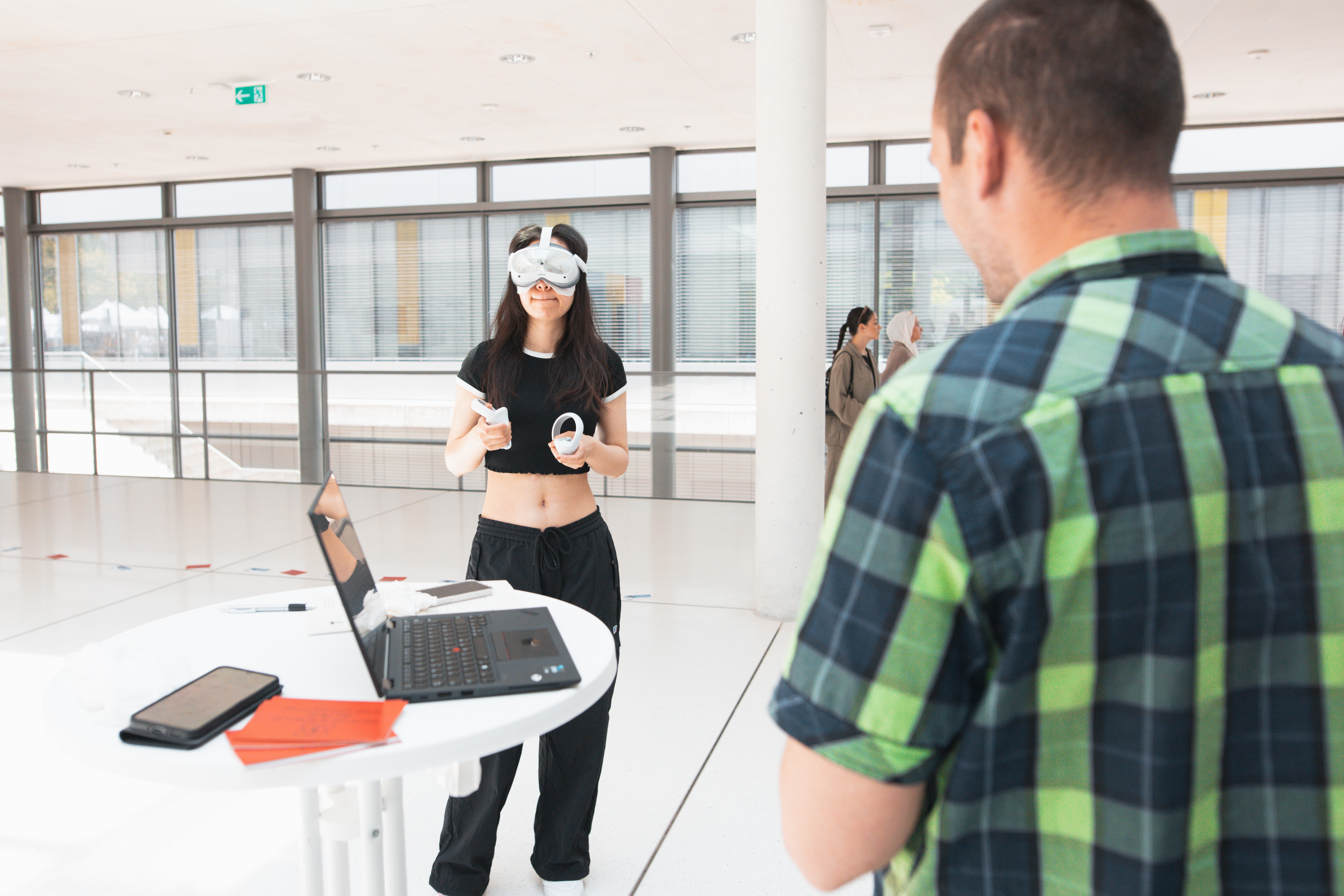
Examines how intelligent assistance systems can adapt to user behavior and context in VR shopping scenarios, optimizing the balance between guidance and autonomy to improve decision-making outcomes.
🧠 Graph Neural Networks: A Comprehensive Overview
Master Thesis — Recommendations via Graph Neural Networks.

A comprehensive guide to Graph Neural Networks covering message passing frameworks, key architectures (GCN, GAT, GraphSAGE, MPNN), applications in recommendation systems, implementation frameworks, and current research directions.
Collaboration
I'm always interested in collaborating on research projects that push the boundaries of AI, XR, and HCI. If you're working on something exciting, let's connect!
ORCID: 0009-0007-1417-8044