Electric Guitar, Part 2: The CAGED Fretboard
🇩🇪 Auf Deutsch lesen~5 min read
MusicTheoryguitarelectric-guitarcaged-systemfretboardpentatonictheorymusic
Comprehensive guide to jazz improvisation covering ii-V-I progressions, rhythm changes, modal jazz, transcription methodology, practice strategies, and essential listening across jazz history.
Essential music theory concepts for electronic music producers covering scales, chords, progressions, rhythm, basslines, and melodic writing — with practical applications for modern production.
Part 1 covered the hardware — body shapes, pickups, woods, amps. This part covers the other half of the instrument: the geometry under your fingers. One fretboard, five shapes, everywhere.
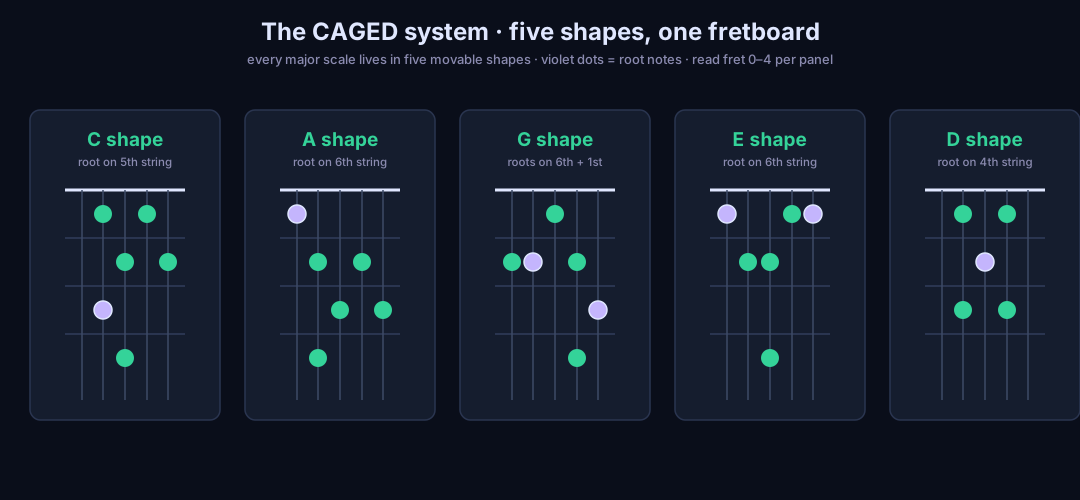 The CAGED system: five major scale shapes named after the open chord shapes C, A, G, E and D
The CAGED system organizes chord shapes across the fretboard based on five open-position chords: C, A, G, E, D. Each shape connects to the next, covering the entire fretboard.
The five open shapes themselves are the anchor — learn them as chords first, then move them:
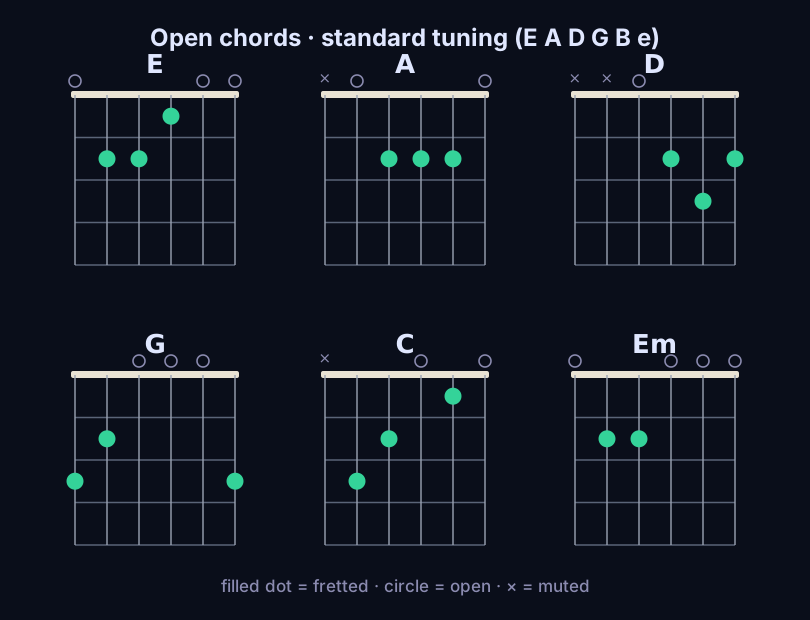 Open major chord shapes: C, A, G, E and D in open position
C Shape: Root on A string (5th fret), second finger forms C shape. Connects to A shape.
C Major - Open Position (0-3 frets)
e|---0---|---|---|  (E) - 3rd
B|---1---|---|---|  (C) - Root
G|---0---|---|---|  (G) - 5th
D|---2---|---|---|  (E) - 3rd
A|---3---|---|---|  (C) - Root
E|---X---|---|---|  (Muted)

C Shape at 3rd fret (Root on A string)
e|---|---|---3---|  (G) - 5th
B|---|---|---5---|  (C) - Root
G|---|---|---4---|  (E) - 3rd
D|---|---|---5---|  (G) - 5th
A|---|---|---3---|  (C) - Root
E|---|---|---X---|  (Muted)
A Shape: Root on A string (5th fret), three fingers form A shape. Connects to G shape.
A Major - Open Position (0-2 frets)
e|---0---|---|---|  (E) - 5th
B|---2---|---|---|  (C#) - 3rd
G|---2---|---|---|  (A) - Root
D|---2---|---|---|  (E) - 5th
A|---0---|---|---|  (A) - Root
E|---X---|---|---|  (Muted)

A Shape at 5th fret (Root on A string)
e|---|---|---5---|  (A) - Root
B|---|---|---7---|  (E) - 5th
G|---|---|---6---|  (C#) - 3rd
D|---|---|---7---|  (A) - Root
A|---|---|---5---|  (A) - Root
E|---|---|---X---|  (Muted)
G Shape: Root on E string (3rd fret), four fingers form G shape (barre version). Connects to E shape.
G Major - Open Position (0-3 frets)
e|---3---|---|---|  (G) - Root
B|---0---|---|---|  (B) - 3rd
G|---0---|---|---|  (G) - Root
D|---0---|---|---|  (D) - 5th
A|---2---|---|---|  (B) - 3rd
E|---3---|---|---|  (G) - Root

G Shape at 3rd fret (Root on E string)
e|---|---|---3---|  (G) - Root
B|---|---|---4---|  (B) - 3rd
G|---|---|---4---|  (G) - Root
D|---|---|---5---|  (D) - 5th
A|---|---|---5---|  (B) - 3rd
E|---|---|---3---|  (G) - Root
E Shape: Root on E string (7th fret), barre across all six strings. Connects to D shape.
E Major - Open Position (0-2 frets)
e|---0---|---|---|  (E) - Root
B|---0---|---|---|  (B) - 3rd
G|---1---|---|---|  (G#) - 5th
D|---2---|---|---|  (E) - Root
A|---2---|---|---|  (B) - 3rd
E|---0---|---|---|  (E) - Root

E Shape at 7th fret (Root on E string) - Barre Chord
e|---|---|---|---|7|---|  (B) - 3rd
B|---|---|---|---|8|---|  (G#) - 5th
G|---|---|---|---|9|---|  (E) - Root
D|---|---|---|---|9|---|  (B) - 3rd
A|---|---|---|---|7|---|  (E) - Root
E|---|---|---|---|7|---|  (B) - 3rd
D Shape: Root on D string (5th fret), four fingers form D shape (partial barre). Connects to C shape.
D Major - Open Position (0-3 frets)
e|---2---|---|---|  (F#) - 3rd
B|---3---|---|---|  (D) - Root
G|---2---|---|---|  (A) - 5th
D|---0---|---|---|  (D) - Root
A|---X---|---|---|  (Muted)
E|---X---|---|---|  (Muted)

D Shape at 5th fret (Root on D string)
e|---|---|---|---|5|---|  (A) - 5th
B|---|---|---|---|7|---|  (D) - Root
G|---|---|---|---|7|---|  (F#) - 3rd
D|---|---|---|---|5|---|  (D) - Root
A|---|---|---|---X|---|  (Muted)
E|---|---|---|---X|---|  (Muted)
CAGED Connection Pattern:
C Shape (Root on A) → A Shape (Root on A) → G Shape (Root on E) → E Shape (Root on E) → D Shape (Root on D) → back to C

Example in C Major:
C Shape: 3rd fret (A string root)
A Shape: 3rd fret (A string root, different fingering)
G Shape: 8th fret (E string root)
E Shape: 8th fret (E string root, barre)
D Shape: 10th fret (D string root)
Here is the part that turns shapes into solos: the minor pentatonic scale (1-♭3-4-5-♭7) nests inside each CAGED shape. Learn the pentatonic box that lives in the E shape and the A shape first — they cover the widest area and contain the classic blues positions.
Five boxes, five shapes: the pentatonic positions are usually taught as "boxes 1-5," but they are the same CAGED geometry with two notes per string removed. Box 1 sits inside the E shape, box 2 inside the D shape, box 3 inside the C shape, box 4 inside the A shape, box 5 inside the G shape.
Major vs minor: the same five notes, counted from a different root, give you the major pentatonic (1-2-3-5-6). The box around the C shape plays major pentatonic; slide the fingers one shape over and it's minor. Same dots, different centre of gravity.
Bending targets: in any box, the ♭3 of the scale bends up a whole step toward the 4, and the 4 bends toward the 5 — those two bends are 80% of blues phrasing. The root and the ♭7 are landing notes.
Bass players: the same logic transfers one string set down. The companion diagram for five-string bass lives on the music section front page.
The CAGED system visualizes chord tones (root, 3rd, 5th, 7th) across the fretboard. This facilitates:
Triad shapes: Each CAGED shape contains closed-position triads. Learn to play triads across three adjacent strings in each shape.
Major and minor shapes: The CAGED system applies to both major and minor chords. Minor shapes flatten the 3rd.
Connecting shapes: Each shape shares notes with the next. Practice transitioning between shapes along the string sets.
| Shape | Root String | Fret (C Major) | Notes Included | Connects To |
|---|---|---|---|---|
| C | A (5th) | 3rd | R-3-5-3-5-R | A shape |
| A | A (5th) | 3rd | R-5-R-3-R-5 | G shape |
| G | E (6th) | 8th | R-3-5-3-R-3 | E shape |
| E | E (6th) | 8th | 3-5-R-3-5-R | D shape |
| D | D (4th) | 10th | 5-R-3-R-X-X | C shape |
Memorization Order: C → A → G → E → D → back to C
Practice Tip: Play each shape as a chord, then arpeggiate the chord tones (R-3-5), then improvise using the pentatonic scale built from that shape.
What does CAGED stand for? The five open chord shapes C, A, G, E, and D. Each shape can slide up the neck behind a movable barre, so every major chord exists five times as geometry - and with it five map views of the same fretboard.
How does the pentatonic scale relate to CAGED? Each CAGED shape contains one pentatonic box. The minor pentatonic pattern you already know is the C shape's box; the other four boxes are the same scale seen through the A, G, E, and D shapes, connected at shared notes.
How long does it take to learn the CAGED system? The shapes in a few weeks; fluent navigation - seeing any chord in all five positions without counting frets - realistically takes months of daily practice. Ten minutes of shape drills per day beats an hour once a week.
Is CAGED enough to play jazz? CAGED gives you the geography; jazz needs the harmonic content inside it - extensions, guide tones, and voice leading on top of the shapes. It is the starting map, not the destination.