Cajón and Percussion: the Box That Plays Itself Into Every Jam
🇩🇪 Auf Deutsch lesen~2 min read
cajonpercussionrhythminstrumentmusic
A practical workflow for producing DUB techno with Ableton Live — leveraging the MCP Extended workflow for hands-on, AI-assisted production.
Percussion is the honest part of music: no pitch to hide behind, only time. The cajón is my entry drug — a plywood box you sit on, with a full rhythm section hiding in its front face.
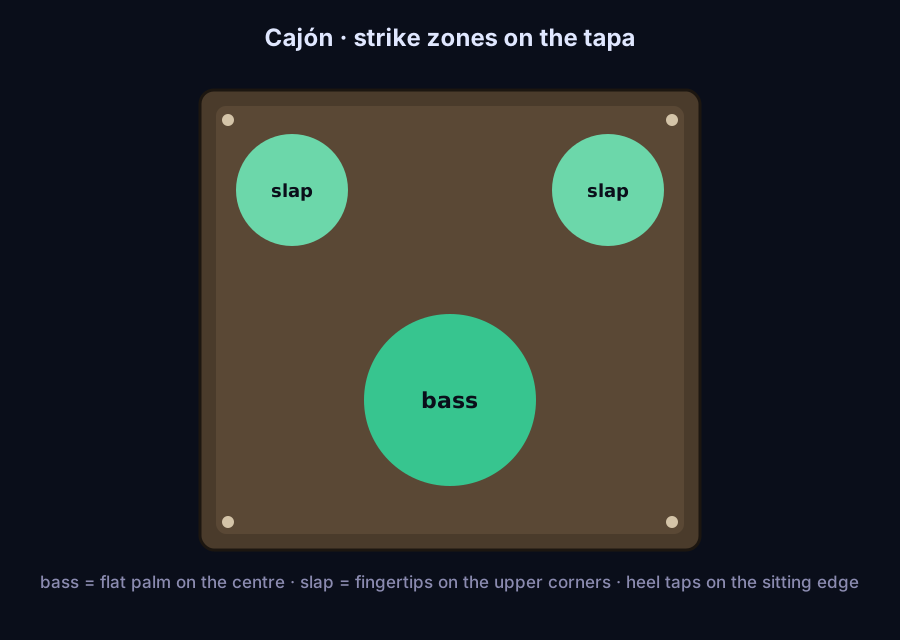 Cajon front face with strike zones: bass zone in the centre, slap zones at the upper corners, heel taps on the sitting edge
Everything on the cajón is a mix of two strokes:
Between them: heel taps on the sitting edge for sixteenth-note ticks, and the flam (bass + slap together) for accents.
Sit down and play a drum kit's job:
count:   1   2   3   4
hands:   B   S   B   S     (B = bass, S = slap)
That boom-bap grid is a full groove — add ghost slaps between the beats and it becomes backbeat-land. From there, one step at a time: sixteenth-note slap fills, 6/8 feel (the cajón is Afro-Peruvian before it is flamenco), and playing quietly — which is the hard part, and the same discipline as muting a 5-string bass.
It doubles as a chair, survives a rehearsal room, and teaches the one skill every other instrument in my setup silently depends on: keeping steady time with your body instead of a click. Pair it with the Launchpad for the electronic half and you have a one-person rhythm section. Back to the music section.